
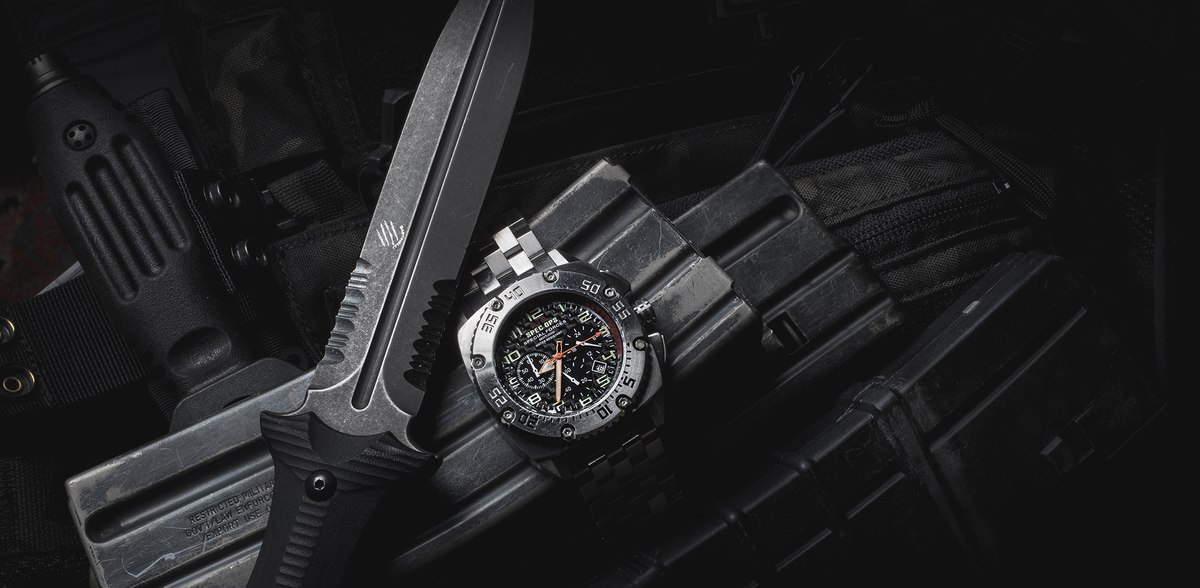
Titanium vs stainless steel watches - pros and cons
Stainless steel and titanium dominate watch case construction for good reason - both are tough, durable, and built to last decades. But they're not interchangeable. Each material has a distinct set of strengths that suit different wearers, different environments, and different expectations. The right choice depends on how you actually use your watch and what you value most from it.
This guide covers the meaningful differences: weight, scratch resistance, corrosion protection, aesthetics, and price - including the alloy grades that matter more than most product listings let on.
What are these materials actually?
Neither stainless steel nor titanium is a single material. Both come in multiple alloy grades, and the grade matters more than most buyers realise.
Stainless Steel: 316L vs 904L
Most steel watches use 316L - an alloy of iron, chromium, nickel, and molybdenum. The chromium resists corrosion; the molybdenum adds resistance to pitting and chloride attack. It performs well, machines cleanly, and costs less to produce than its alternatives.
904L has higher chromium, nickel, and molybdenum content, giving it better resistance to saltwater and acids plus a deeper, longer-lasting polish. It costs more to produce. For regular ocean use or buyers who want the best finish retention, it's worth it. For everything else, 316L is more than adequate.
Titanium: Grade 2 vs Grade 5
Grade 2 titanium is commercially pure - around 99.5% titanium, lightweight, corrosion-resistant, and completely hypoallergenic. Its main limitation is softness: unmodified Grade 2 scratches more readily than 316L steel, which is why many brands apply surface hardening treatments when using it.
Grade 5 (Ti-6Al-4V) is an aerospace alloy that combines titanium with aluminium and vanadium. It is harder than 316L stainless steel, significantly tougher than Grade 2, and still around 40% lighter than steel. It costs more to machine, but it resolves most of the scratch concerns that follow titanium's reputation. When evaluating a titanium watch, knowing the grade tells you far more than the material label alone.
Weight and wrist comfort
Titanium is roughly 40% lighter than stainless steel by volume. On a smaller watch with a leather strap, that's a modest advantage. On a 44mm or 47mm case with a full metal bracelet, it's significant over a full day - a watch you don't notice is a watch you'll keep wearing.
Some wearers find the heft of steel part of the appeal - the weight communicates solidity in a way specs don't capture. If you're used to steel, titanium's lightness can take adjustment. Try both before committing if you can.
Scratch resistance and long-term wear
How each material scratches
Unmodified Grade 2 titanium scratches more easily than 316L steel. The difference is in how those scratches appear: stainless steel shows bright, crisp hairlines that catch the light immediately, particularly on polished surfaces. Titanium scuffs rather than scratches cleanly, and its naturally matte, grey finish absorbs the marks - they're less visually dramatic from a distance, though the surface can develop a general haze with heavy use. Grade 5 titanium is harder than 316L and performs comparably to steel in everyday scratch resistance.
Stainless steel is easier to refinish - a watchmaker can restore it to near-original condition with standard tools. Titanium requires specific products and technique; the wrong approach can make things worse.
Surface treatments
Both materials can be treated with DLC or PVD coatings that dramatically improve scratch resistance. Some manufacturers harden the titanium surface to exceed standard steel in hardness. A treated Grade 2 case can outperform an untreated Grade 5 - always check the full spec, not just the base material.
Corrosion and water resistance
Titanium forms a natural, self-repairing oxide layer that resists saltwater and chemicals better than any steel grade. Standard 316L can develop pitting with prolonged saltwater exposure. 904L is better, but still falls short of titanium in marine environments.
For regular ocean use, titanium is the stronger choice. For everyday wear with occasional water exposure, quality stainless steel is entirely adequate.
Aesthetics and finish
Stainless steel is bright, warm silver - mirror-polished with depth and sparkle. It reads as classic and traditional, and photographs well.
Titanium is darker and greyer - closer to gunmetal than silver. In a brushed finish it's understated and tool-forward. Whether that's a positive depends on what you want the watch to say.
Steel excels in high-contrast case work - polished edges against a brushed body. Titanium suits consistent brushed or bead-blasted finishes. Polished titanium is possible but less brilliant than steel and harder to maintain. If you want a watch that catches the light in a formal setting, steel wins. If you want something that looks like serious equipment, titanium is the natural fit.
Price and value
The titanium premium - typically 30-50% over an equivalent steel model - comes from manufacturing cost. Titanium is harder to machine, wears tools faster, and demands tighter tolerances. That cost is real and reflected honestly in the price.
If you wear your watch daily in demanding conditions, have a nickel sensitivity, or carry a large case on a full bracelet, titanium earns its cost. If you wear your watch socially or want the best value per dollar, stainless steel is outstanding and will serve you just as well in most scenarios.
Which Material Should You Choose?
The honest answer is that both materials are excellent, and either will serve you well in most real-world conditions. The choice comes down to use case and personal preference.
Choose titanium if you wear a large case daily and want to reduce wrist fatigue; if you use your watch regularly in saltwater or high-exposure environments; if you have a nickel sensitivity or skin reaction to metal; or if you prefer the modern, tactical aesthetic of a darker, matte-finish case. Titanium rewards active, high-use wearers who want the material to get out of the way and let them focus on the day.
Choose stainless steel if you value the classic, bright-metal appearance of a traditional watch and want a finish that photographs and presents well; if you want the ability to easily refinish and restore the case over time; if your watch sees primarily social and everyday wear rather than field conditions; or if you want outstanding performance-per-dollar without the titanium premium. Stainless steel is the benchmark material for a reason - it does nearly everything well, at a price that makes sense.
The one scenario where the answer is clear-cut: if you have a documented nickel allergy or skin sensitivity to metal, go titanium. It's not a close call.
The best MTM titanium watches
Built for extended field use - where titanium's weight and corrosion resistance earn their keep.
The Air Stryk II is the pick if you want a tactical titanium watch that stays out of your way. The titanium case keeps it light enough to forget on a long op, while the Lumi Carbon dial means you can read it in complete darkness without reaching for a torch. It's the kind of watch that earns its place by never becoming a liability.

MTM SPECIAL OPS
Black Air Stryk II
Best Titanium Tactical Watch
$1,585
- -Titanium case - lightweight, corrosion-resistant, built for long-duration wear
- -Lumi Carbon dial for complete darkness readability
- -Sapphire crystal with anti-reflective coating
- -200m water resistance with locking screw-down crown
- -Swiss quartz movement - precision built for field conditions
The Cobra 47 is the case for anyone who has always wanted to wear a large watch but found the weight of steel a compromise. At 47mm, a stainless steel version of this case would feel substantial after a full day - in titanium, the size becomes an asset rather than a burden. The corrosion resistance makes it equally at home at sea or on land.

MTM SPECIAL OPS
Grey Cobra 47
Best Titanium Watch for Large-Case Comfort
$1,585
- -47mm titanium case - commanding presence without the weight penalty of steel
- -Carbon Lumi dial - calibrated quartz chronograph movement
- -Corrosion-resistant titanium - built for saltwater and field use
- -Sapphire crystal, screw-down crown, 200m water resistance
- -Hypoallergenic - no nickel contact with skin
The best MTM stainless steel watches
For those who want the classic finish and value of stainless steel.
The Predator is the pick if you want a serious tactical chronograph built around the dependability of 316L steel. The three-dial layout measures to a tenth of a second, the tritium hands glow without any battery or charging, and at $1,090 it delivers full Special Ops spec at a price point that sits well below the titanium range. If you want a steel watch you can actually use hard, this is it.

MTM SPECIAL OPS
Black Predator
Best Stainless Steel Tactical Chronograph
$1,090
- -316L stainless steel case - proven toughness, substantial wrist presence
- -Three-dial chronograph measuring to 1/10th of a second
- -Tritium illuminated hands - self-powered night readability
- -200m water resistance with locking screw-down crown
- -Fully customisable - case, band, and dial configuration available
The Hypertec Chrono 2 is the entry point into the MTM range - and a good argument for why stainless steel remains the smartest choice for a first serious watch. The stainless case is tough, the 60-minute chronograph is clean and usable, and the fully customisable configuration means you can spec it to your exact preferences. At $455 it's the most accessible watch in this comparison, and it doesn't compromise on the things that matter.

MTM HYPERTEC
Hypertec Chrono 2
Best Entry-Point Stainless Steel Chronograph
$455
- -Stainless steel case - robust, scratch-resistant, built for everyday wear
- -60-minute chronograph - precision timing in a clean layout
- -Locking double O-ring sealed crown - water and dust protection
- -Scratch-resistant crystal - maintains clarity under daily use
- -Fully customisable - dial, band, and case options available
Frequently Asked Questions
Is titanium or stainless steel better for a watch?
Titanium is lighter, more corrosion-resistant, and hypoallergenic - better for demanding use and marine environments. Stainless steel holds a brighter finish, is easier to refinish, and costs less. Both are excellent. The right choice depends on how you wear your watch.
Which scratches more easily - titanium or stainless steel?
Grade 2 titanium scratches more easily than 316L steel, though the scratches are less visible due to titanium's matte finish. Grade 5 titanium is harder than 316L and performs comparably to steel. DLC or PVD surface treatments on either material significantly improve scratch resistance regardless of the base grade.
Are titanium watches worth the extra cost?
For daily wear in demanding conditions or if you have a nickel sensitivity, yes. The premium reflects real manufacturing cost. For casual wear where aesthetics matter more than performance, stainless steel is outstanding value.
Is titanium hypoallergenic?
Yes. Titanium contains no nickel and is used in medical implants for this reason. Stainless steel alloys contain 10-28% nickel depending on grade. If you've had skin irritation from metal watches, titanium is the clear choice.
What is the difference between Grade 2 and Grade 5 titanium?
Grade 2 is commercially pure titanium - lightweight and corrosion-resistant but relatively soft. Grade 5 (Ti-6Al-4V) is an aerospace alloy that's harder than 316L stainless steel while remaining around 40% lighter. For a titanium watch that will see hard daily use, Grade 5 is the preferred choice.


